

Jesus Did Not Ride a Donkey to Be Humble. He Was Making a Political Declaration That Rome and the Pharisees Understood Immediately -- and Most Christians Have Never Been Told.

This simple 66-page guide has helped thousands of believers finally understand God’s Word with clarity, confidence, and renewed faith -- even in life’s darkest moments.
On the Sunday before His death, Jesus did something that every person watching understood immediately.
He borrowed a donkey and rode it into Jerusalem.
The crowds went wild. They threw their cloaks on the road. They cut palm branches and waved them. They shouted "Hosanna!" -- which means "Save us now!" -- and they called Him the Son of David.
Most Christians have been taught that Jesus rode a donkey as a symbol of humility. That He was making a gentle, peaceful entrance. That He was showing His followers that He was not the kind of conquering military king they expected.
That is not wrong. But it is only a fraction of what was actually happening.
Because in the ancient world, a king on a donkey did not mean he was being humble.
It meant the war was already over.
What a Donkey Actually Meant
In the ancient Near East, kings rode horses when they were going to war. A king on a horse meant the battle was coming, the army was mobilizing, and the enemy should prepare to fight or flee.
But a king who rode a donkey was sending a completely different message. A donkey was the mount of a king who was coming in peace -- because the victory had already been secured. He was not arriving to fight. He was arriving to reign.
The prophet Zechariah had written this down five hundred years before Jesus was born: "Rejoice greatly, Daughter Zion! Shout, Daughter Jerusalem! See, your king comes to you, righteous and victorious, lowly and riding on a donkey, on a colt, the foal of a donkey."
The word Zechariah used was not "humble." It was "victorious." The king on the donkey was not arriving in defeat. He was arriving in triumph, because the battle had already been won.
Every person in that crowd who knew their Scriptures -- and in first-century Jerusalem, that was nearly everyone -- recognized what they were watching the moment Jesus mounted that animal.
He was not making a gentle entrance. He was making a coronation procession.
The Pharisees understood it immediately. That is why they told Jesus to silence the crowd. They were not offended by the noise. They were terrified by the claim.
And the Roman soldiers stationed at the city gates understood it too. Rome had a word for what Jesus was doing. They called it a triumphus -- a triumphal procession reserved for generals who had won a decisive military victory. The general rode through the city while the crowds cheered and the conquered enemies were paraded in chains behind him.
Jesus was performing a triumphus. Without an army. Without a sword. Without a single Roman soldier in chains.
He was declaring that He had already won a victory that Rome did not yet understand.
The Night My Bible Study Changed Forever
I have been teaching the Palm Sunday account for fifteen years. I always focused on the humility angle. I told my congregation that Jesus chose a donkey instead of a warhorse to show that His kingdom was not of this world.
That is true. But it is not the whole truth.
The night I taught the Zechariah connection -- the night I explained that "victorious" was the word the prophet used, not "humble" -- the room went completely quiet in a way that I had never experienced before.
Not the polite silence of people waiting for the next point. The silence of people whose entire framework for a story they thought they knew had just shifted beneath them.
One man in the front row had been a deacon in his church for thirty years. He had read the Palm Sunday account every single year of his adult life. He had heard it preached from pulpits in four different states.
He had never once been told that the donkey was a victory symbol.
He had never been told about the Roman triumphus. He had never understood that the Pharisees were not annoyed by the crowd -- they were alarmed by the political and theological claim being made in broad daylight in front of the entire city.
A woman across the table said quietly, "So when the Pharisees told Him to silence the crowd, it wasn’t because they were annoyed. They were trying to stop a public declaration of kingship."
Yes. Exactly.
And Jesus answered them: "I tell you, if they keep quiet, the stones will cry out."
He was not going to silence a coronation procession. Because it was not a procession of humility. It was a procession of victory. And the victory was not something that could be silenced, because it had already been secured before the foundation of the world.

What You Have Been Missing
Did you know that the palm branches the crowd was waving were not just a festive decoration? Palm branches were the national symbol of Israel -- the same symbol that appeared on Jewish coins minted during periods of independence. Waving palm branches was a political act. It was a declaration of Jewish national identity and sovereignty. The crowd was not just welcoming a teacher. They were declaring a king.
Did you know that the route Jesus took into Jerusalem was the same route that Jewish kings had historically used for their coronation processions? That by riding down the Mount of Olives and through the Eastern Gate, He was following a path that every person watching would have recognized as the royal entrance?
Did you know that the shout "Hosanna" -- which we translate as a word of praise -- was originally a desperate cry for deliverance? "Hosanna" comes from the Hebrew hoshia-na, meaning "Save us, we pray." The crowd was not just celebrating. They were begging their king to rescue them. And He was answering their cry, not with a sword, but with a cross.
Context changes everything. Every single time.
The Triumphal Entry is not a gentle Sunday School story about a humble teacher on a borrowed donkey. It is a carefully orchestrated royal proclamation, fulfilling a five-hundred-year-old prophecy, performed in front of the entire city of Jerusalem, in the language of kings and conquerors.
Jesus was not sneaking into Jerusalem. He was announcing His arrival.
Introducing the Saints Label Bible Study Guide

That is exactly what this guide was created to do.
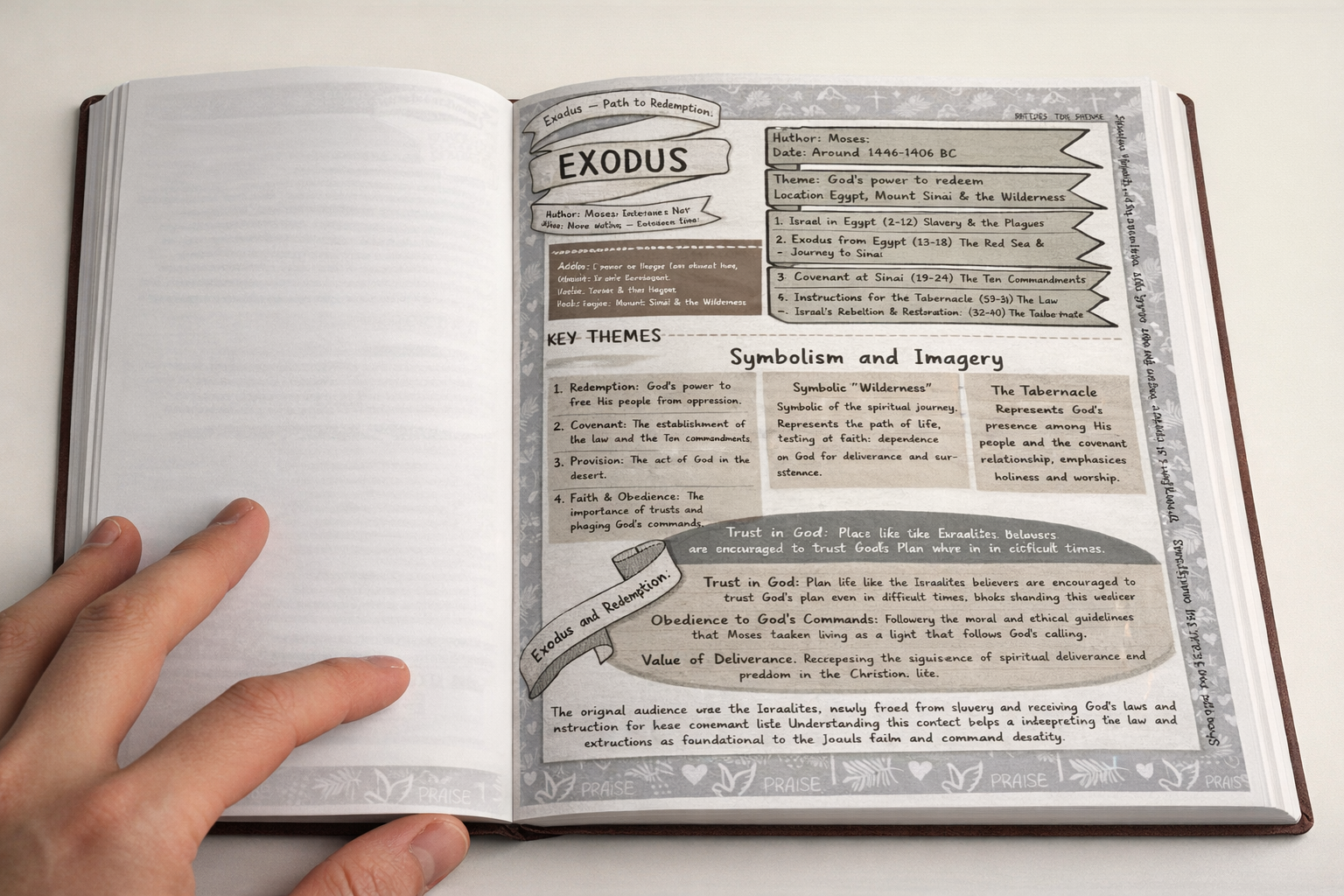
It is 66 pages. One dedicated page for every book of the Bible. Each page is carefully laid out to give you exactly what you need to approach Scripture with clarity and confidence.
Who wrote the book. When it was written. Why it was written. What was happening in the world at the time. The key themes God intended to deliver. And at the bottom of every page, practical steps to apply what you are reading to your real life today.
Not vague spiritual advice. Real, actionable steps.
Zechariah. The prophet who described the king coming on a donkey five hundred years before it happened -- and what that donkey actually meant.
Matthew. Written to a Jewish audience who would have recognized every detail of the Triumphal Entry as a fulfillment of prophecy.
Psalms. The Hallel psalms the crowd was singing as Jesus rode in -- and why those specific psalms were chosen for that specific moment.
Revelation. The final coronation. The eternal reign. The King who rode a donkey in peace the first time, and will return on a white horse in judgment the second time.
Every book laid out the same way. Clean, simple, consistent. Once you have used it for one book you instantly know how to approach the next. Your brain begins to recognize the rhythm and that familiarity builds real confidence.
Written in plain language. No seminary terms. No complicated theology. Just the context you need so that when you open your Bible you are not guessing. You are understanding.
Here Is What Believers Are Saying After Using This Guide


How Much Does It Cost to Finally Understand God’s Word?
I have watched faithful believers spend hundreds trying to find the understanding they were looking for. Seminary courses starting at $500 per class. Commentary sets costing $200 to $600. Bible study programs running $300 to $400. And after all of that, many of them still came back with the same questions and the same quiet frustration.
The Saints Label Bible Study Guide is regularly priced at $60. For a resource covering all 66 books of the Bible that you will return to for the rest of your life, that is already extraordinary value.
But right now during our Easter Sale:
And if you want to share it with a spouse, a family member, or your entire Bible study group, bundle discounts go even deeper.
GET YOURS NOW -- Easter Sale: 35% OFFHow Do I Get My Copy Before the Sale Ends?
If you have ever read the Palm Sunday story and wondered why it mattered so much…
If you have ever sat in a Bible study nodding along while feeling completely lost inside…
If you have ever opened your Bible, read a chapter, and closed it with no idea what you just read…
If you have ever felt like you are the only one who does not understand while everyone else seems to get it…
You are not alone. And it has nothing to do with you.
You just needed context.
The King did not ride into Jerusalem quietly. He rode in announcing His victory. He rode in fulfilling prophecy that had been written five hundred years before He was born. He rode in making a claim that the Pharisees understood, that Rome understood, and that the crowd understood -- even if they did not yet understand what the victory would cost Him.
Get closer to God by actually understanding His Word. Not just reading it. Understanding it.
Don’t let another year go by feeling lost in Scripture.
GET YOURS NOW -- Easter Sale: 35% OFF